 Tasked with scouting new sites for our project, we were
excited to be on our own. New bogs, here
we come! I love walking through bogs and
today we planned to hit several. The sun
was shining, we had Tim Hortons in our bellies, hot tea in the thermos, and
noises of Fort McMurray were soon behind us.
Armed with black and white printouts from Google Earth and a sense of
adventure we set off southbound with our ‘bog-eyes’ on.
Tasked with scouting new sites for our project, we were
excited to be on our own. New bogs, here
we come! I love walking through bogs and
today we planned to hit several. The sun
was shining, we had Tim Hortons in our bellies, hot tea in the thermos, and
noises of Fort McMurray were soon behind us.
Armed with black and white printouts from Google Earth and a sense of
adventure we set off southbound with our ‘bog-eyes’ on.
Every so often, this happens… we expand a project or find
a new project and all of a sudden, we’re out driving around in the truck with
our boots on ready to stop at every peatland with potential. We get out, walk around a bit, give it the
thumbs up or thumbs down, and move on.
Today we had prepared for a few sites.
 The first bog of the day was out a sandy rutty road which
was precariously positioned steps from a very large lake seemingly retained by a
small berm… cattails flanked the north side.
It has been dry here for quite some time, so we had no problems; the visual,
however, was a bit disturbing. The bog
was also right there on the road – just how we like them. We stopped and put on our boots with two out
of three of us squishing a bit from yesterday’s soakers. The woods were lovely dark and deep and almost
immediately we stumbled upon an animal burrow – something we are unaccustomed
to seeing. The openings – 12-15 cm diameter
or so – seemed just right for a mustelid of some kind. Pretty cool stuff. Full of puffy feathermoss and big black spruce
trees, it was not the bog we were looking for, but it was very pretty and after
a bit of exploration, we wished it well.
We moved on: the piece de
resistance was yet to come.
The first bog of the day was out a sandy rutty road which
was precariously positioned steps from a very large lake seemingly retained by a
small berm… cattails flanked the north side.
It has been dry here for quite some time, so we had no problems; the visual,
however, was a bit disturbing. The bog
was also right there on the road – just how we like them. We stopped and put on our boots with two out
of three of us squishing a bit from yesterday’s soakers. The woods were lovely dark and deep and almost
immediately we stumbled upon an animal burrow – something we are unaccustomed
to seeing. The openings – 12-15 cm diameter
or so – seemed just right for a mustelid of some kind. Pretty cool stuff. Full of puffy feathermoss and big black spruce
trees, it was not the bog we were looking for, but it was very pretty and after
a bit of exploration, we wished it well.
We moved on: the piece de
resistance was yet to come.
Our big goal that day was a fen-lake-bog islands combo. We should have known it was going to be
trouble. Step one: finding the road. We missed it on first pass because we were
informed it was a paved road. It wasn’t. That’s ok, we went down another road,
instead, and found a whole lotta’ VERY DUSTY bogs that could have been
delightful were it not for the choking dust haze squelching everyone’s
happiness. We backtracked and found the correct
road. We check in with the woman who is
sitting in her truck all day flagging people down to take their numbers and
tally business. Up and down big hills,
over one lane tiny bridges, we pass beautiful landscape and countless Jack Pine
forests, Aspen uplands, fens, and little bogs.
We pass very few trucks, and eventually, became the only traffic. Fifteen miles down the dirt road, we stop on
the side of the road and hope against all hope that this is the spot. We only have our odometer and our satellite
imagery at this point, foolishly leaving our gps at home. There is no cellular service here. We are in the middle of nowhere. We can only assume we’ll come on it eventually
if we walk south from here.
So, we start in.
Brambles. Lots and lots of
prickly brambles. I’ve never been so mad
at wild roses in my life. They were
mixed in with drooping, criss-crossing, akimbo, skinny, branchy, shrubby crap
that morphed into full-fledged willow mess at decreasing elevation. We were scratched, irritated, and realized we
should have brought lunch on this adventure.
With willows came wet. Sloggy mess
morphed into treed sloppy mess with holes ready to take a boot. Avoid trees, avoid willows, avoid holes, slap
at bugs, overheat, repeat. Finally some
boggy parts – hummocks, thank God! But still
willows and still larch now and still sloggy holes and not at all what one
might want for a scientific research site that must be accessed 5 times a year. By now, we were demoralized and quite frankly
were growing stupid (save your jokes).
We had done way too much fen tromping, willow avoiding, and bramble
broaching and now were too tired to truly explore the innards of the Bog
island, but from our vantage, we saw big ole’ larch overhead much farther in
(in bog parlance, again…. No bueno). We headed
back hoping to find a better route.
We
found cutlines in the fen, so knew where we were and tried a more bee-lined
approach to the road. It took us,
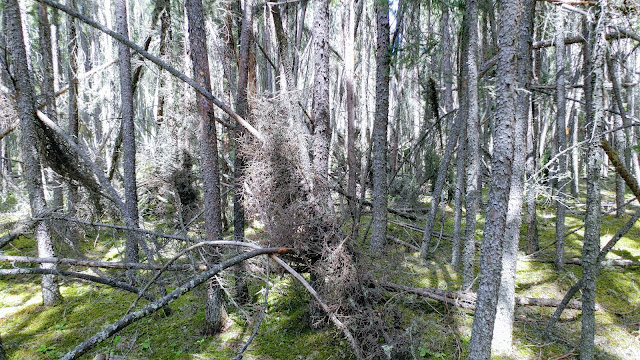
eventually, to a beautiful – and I mean BEAUTIFUL – forest of spruce so dense,
it shaded out the world. There were no
vasculars in the understory, but Pleurozium moss carpeted the floor. Everything was covered with it. We had found what appeared to be a two species forest. I’m sure there were more species there, but you get
the idea. It was dark and calm and
beautiful and amazing. We sighed a sigh,
calmed our brains, and gathered our strength for tackling the brambles to come. At the edge, Ledum of unusual size appeared,
and willows began anew. We had definitely
found a much better way to scale the upland.
Everything seemed better on the way out.
Shockingly, we popped out AT OUR TRUCK.
Amazing. We filled our water
bottles, breathed the air, ate apples, and made peanut butter and jelly
sandwiches on the tailgate. Deer crossed
the road, we recovered, and looked at each other with relief.

We had an adventure filled memory-making day. I'm sure there are many to come. Happy return to field season, everyone!


 Tasked with scouting new sites for our project, we were
excited to be on our own. New bogs, here
we come! I love walking through bogs and
today we planned to hit several. The sun
was shining, we had Tim Hortons in our bellies, hot tea in the thermos, and
noises of Fort McMurray were soon behind us.
Armed with black and white printouts from Google Earth and a sense of
adventure we set off southbound with our ‘bog-eyes’ on.
Tasked with scouting new sites for our project, we were
excited to be on our own. New bogs, here
we come! I love walking through bogs and
today we planned to hit several. The sun
was shining, we had Tim Hortons in our bellies, hot tea in the thermos, and
noises of Fort McMurray were soon behind us.
Armed with black and white printouts from Google Earth and a sense of
adventure we set off southbound with our ‘bog-eyes’ on. 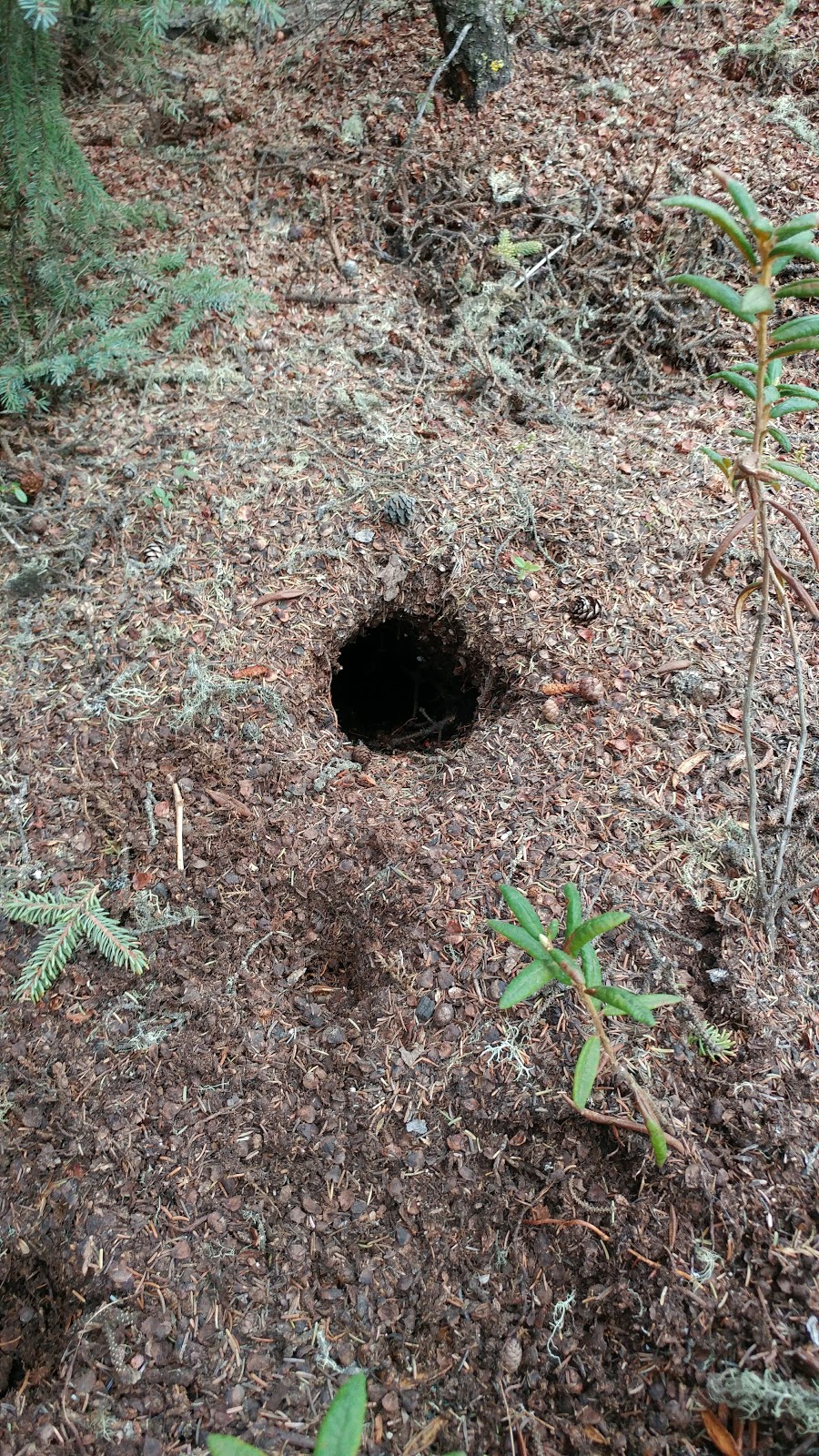 The first bog of the day was out a sandy rutty road which
was precariously positioned steps from a very large lake seemingly retained by a
small berm… cattails flanked the north side.
It has been dry here for quite some time, so we had no problems; the visual,
however, was a bit disturbing. The bog
was also right there on the road – just how we like them. We stopped and put on our boots with two out
of three of us squishing a bit from yesterday’s soakers. The woods were lovely dark and deep and almost
immediately we stumbled upon an animal burrow – something we are unaccustomed
to seeing. The openings – 12-15 cm diameter
or so – seemed just right for a mustelid of some kind. Pretty cool stuff. Full of puffy feathermoss and big black spruce
trees, it was not the bog we were looking for, but it was very pretty and after
a bit of exploration, we wished it well.
We moved on: the piece de
resistance was yet to come.
The first bog of the day was out a sandy rutty road which
was precariously positioned steps from a very large lake seemingly retained by a
small berm… cattails flanked the north side.
It has been dry here for quite some time, so we had no problems; the visual,
however, was a bit disturbing. The bog
was also right there on the road – just how we like them. We stopped and put on our boots with two out
of three of us squishing a bit from yesterday’s soakers. The woods were lovely dark and deep and almost
immediately we stumbled upon an animal burrow – something we are unaccustomed
to seeing. The openings – 12-15 cm diameter
or so – seemed just right for a mustelid of some kind. Pretty cool stuff. Full of puffy feathermoss and big black spruce
trees, it was not the bog we were looking for, but it was very pretty and after
a bit of exploration, we wished it well.
We moved on: the piece de
resistance was yet to come.


 In contrast, we have two beautifully green and vibrant sites
near Wabasca, Alberta – a short drive from Athabasca where our base of operations
remains for now. I have grown to love them
both. The oldest of our sites, Wabasca
old, is full of surprises and, as far as bogs go, is pretty diverse.
The trees are dense, which made plot layout a challenge, and this
trickles down to me wandering around almost every time I’m there to make sure I’m
at the right spot. Mosses run roughshod over
fallen trees and climb up living trees making the spruce throw out new roots in
order to survive. It is a silent battle
out there that hardly anyone sees or understands, but we speak some of the
language and we try to listen and learn.
In contrast, we have two beautifully green and vibrant sites
near Wabasca, Alberta – a short drive from Athabasca where our base of operations
remains for now. I have grown to love them
both. The oldest of our sites, Wabasca
old, is full of surprises and, as far as bogs go, is pretty diverse.
The trees are dense, which made plot layout a challenge, and this
trickles down to me wandering around almost every time I’m there to make sure I’m
at the right spot. Mosses run roughshod over
fallen trees and climb up living trees making the spruce throw out new roots in
order to survive. It is a silent battle
out there that hardly anyone sees or understands, but we speak some of the
language and we try to listen and learn.
 The green mosses, being so many, are
as good as brawny.
The green mosses, being so many, are
as good as brawny.


 As a rule, I think the training of field
ecologists needs to include some creative problem solving instruction. Thinking outside the box is often required and is an excellent life skill in general. For us, the
2-3.5 hour drives to our sites with very little available to us once we leave Meanook,
encourage both thinking ahead and thinking on the fly… it is a long drive back if you forget
something, or if a problem arises that you must fix on-site. We have no electricity, very few
gas-stations, and a host of unknowns every time we go out. It is good to be prepared. For example, I was cleaning out my field pack
this morning and the contents include: rain jacket, rain pants, 2 spare resin tubes,
sunscreen, 2 headnets, granola bar, 4 sharpies, 1 pen, 2 pencils, one notebook,
duct tape, electrical tape, 2 flathead screwdrivers, 2 nutdrivers, 1 blue Juice
multi-tool, 5 zip ties, an adjustable wrench, 1 Loupe on a BIOGEOMON lanyard, a
pair of work gloves, a pair of lab gloves, a tape measure, light in the rain matches, chemical hand warmers, a bandanna 1 carabiner knife, one baseball
hat, electric fence insulators for both t-posts and tree-posts, nails, a
three-way-stop-cock, flagging tape, a crank-wire setter, tissues, 4 band-aids, stretchy
medical tape, lip balm, and an orange. This motley assortment of gear has been
getting me through the days.
As a rule, I think the training of field
ecologists needs to include some creative problem solving instruction. Thinking outside the box is often required and is an excellent life skill in general. For us, the
2-3.5 hour drives to our sites with very little available to us once we leave Meanook,
encourage both thinking ahead and thinking on the fly… it is a long drive back if you forget
something, or if a problem arises that you must fix on-site. We have no electricity, very few
gas-stations, and a host of unknowns every time we go out. It is good to be prepared. For example, I was cleaning out my field pack
this morning and the contents include: rain jacket, rain pants, 2 spare resin tubes,
sunscreen, 2 headnets, granola bar, 4 sharpies, 1 pen, 2 pencils, one notebook,
duct tape, electrical tape, 2 flathead screwdrivers, 2 nutdrivers, 1 blue Juice
multi-tool, 5 zip ties, an adjustable wrench, 1 Loupe on a BIOGEOMON lanyard, a
pair of work gloves, a pair of lab gloves, a tape measure, light in the rain matches, chemical hand warmers, a bandanna 1 carabiner knife, one baseball
hat, electric fence insulators for both t-posts and tree-posts, nails, a
three-way-stop-cock, flagging tape, a crank-wire setter, tissues, 4 band-aids, stretchy
medical tape, lip balm, and an orange. This motley assortment of gear has been
getting me through the days. 
 That said, sometimes you think you are ready
for a situation, and you find that you are not.
There are occasions when even in the safety of our lab back at the field
station, sometimes the simplest solution is the best solution. Two days ago, a time-sensitive project
involved grinding over 150 very small samples of peat into a fine powder over a
very short period of time. Our fancy
$1500 glorified coffee grinder, it turns out, is rebellious and needs 10
minutes of rest for every minute it works.
And to boot, for such small samples, it wasn’t very talented. Lazy and inefficient, the grinder was a
frustration. We were spinning for
solutions. The mortar and pestles had
all burned in the fire two falls ago, there were none in Athabasca, and golf
balls and kitchen bowls were too frictionless to do anything useful. After 6 hours of using blunt ends of hand
tools to rub peat through screens overlaying sieves, our arms and hands
suffered, but we were making progress. Unable
to continue to grip the knife sharpener we procured from the kitchen, achiness forced new innovations. Why we didn’t think of it sooner is beyond
me, but simply squeezing and rubbing the samples between our gloved fingers and
then sifting it through the three layers of screening was the solution we’d
been struggling for for days. Who needs
expensive equipment? Who needs even
small hand tools? All we really needed
was ourselves for perfectly homogenized peat powder. Gloved hands:
$2.50. Sweat equity: $0. Ground
moss: Priceless.
That said, sometimes you think you are ready
for a situation, and you find that you are not.
There are occasions when even in the safety of our lab back at the field
station, sometimes the simplest solution is the best solution. Two days ago, a time-sensitive project
involved grinding over 150 very small samples of peat into a fine powder over a
very short period of time. Our fancy
$1500 glorified coffee grinder, it turns out, is rebellious and needs 10
minutes of rest for every minute it works.
And to boot, for such small samples, it wasn’t very talented. Lazy and inefficient, the grinder was a
frustration. We were spinning for
solutions. The mortar and pestles had
all burned in the fire two falls ago, there were none in Athabasca, and golf
balls and kitchen bowls were too frictionless to do anything useful. After 6 hours of using blunt ends of hand
tools to rub peat through screens overlaying sieves, our arms and hands
suffered, but we were making progress. Unable
to continue to grip the knife sharpener we procured from the kitchen, achiness forced new innovations. Why we didn’t think of it sooner is beyond
me, but simply squeezing and rubbing the samples between our gloved fingers and
then sifting it through the three layers of screening was the solution we’d
been struggling for for days. Who needs
expensive equipment? Who needs even
small hand tools? All we really needed
was ourselves for perfectly homogenized peat powder. Gloved hands:
$2.50. Sweat equity: $0. Ground
moss: Priceless. 
